Relationships
The Emergency Room Test
Sometimes you don't realize you've been given an answer until weeks later.
5 min read
Sometimes you don't realize you've been given an answer until weeks later.
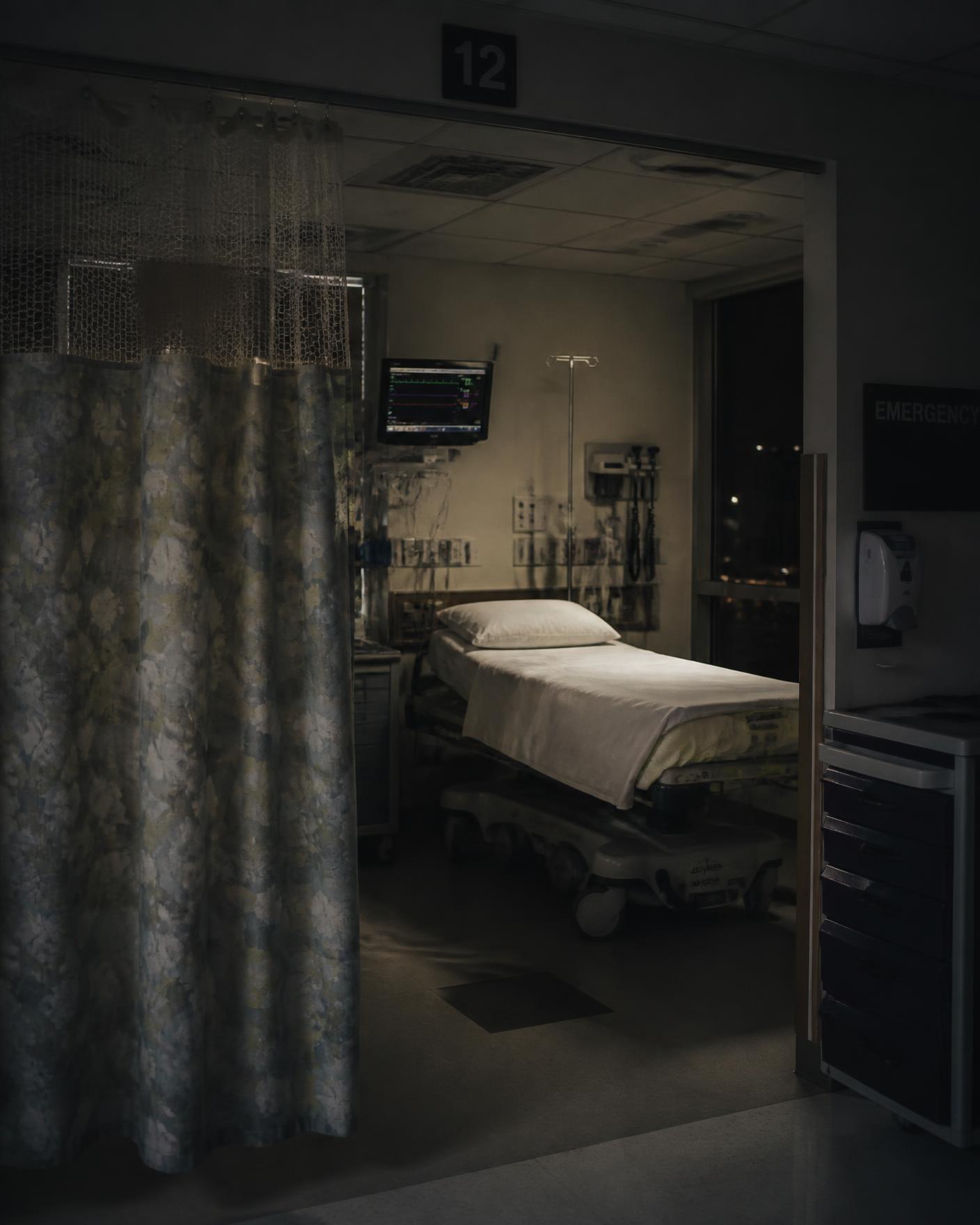
I ended up in an emergency room recently.
I'm fine.
And at the time, there was one person I never expected to hear from.
They didn't know.
At least that's what I thought.
So when there was no call, no text, no Are you okay?, I attached absolutely no meaning to it.
Why would I?
You can't expect someone to respond to something they don't know happened.

Then, weeks later, I learned something.
They knew.
They had read what I wrote about the emergency room shortly after it happened.
And suddenly I found myself looking backward at a moment I hadn't thought twice about when it actually occurred.
The silence hadn't changed.
The information had.
They knew. And did nothing.
That was the Emergency Room Test.
Except it wasn't really a test at all.
I wasn't testing anyone.
I didn't go to an emergency room wondering who would show up.
I didn't write about it hoping for a response.
I didn't even know there was anything to interpret.
Only weeks later did I discover that someone who had been a very important part of my life knew what had happened.
And chose not to reach out.
No Anger In It
There is no anger in that sentence.
There doesn't need to be.
Maybe reaching out would have felt complicated.
Maybe they were protecting a boundary.
Maybe they didn't know what to say.
Maybe they believed contacting me would create confusion neither of us needed.
All of those things could be true.
I don't know.
And that's the point.
I don't need to know.
For a long time, I thought closure came from understanding.
If I could understand why someone behaved a certain way, I could make peace with it.
So I analyzed.
I tried to reconcile words with actions.
I looked for explanations that made everything fit together.
But sometimes you don't get the explanation.
You get the behavior. And the behavior is enough.
That doesn't make the other person bad.
It doesn't erase what you shared.
It doesn't mean they never loved you.
It doesn't even tell you what they were feeling when they decided not to reach out.
It tells you only what they did.
And sometimes that's all the information you need.
Because the temptation when you care about someone is to keep asking life the same question until you get the answer you wanted.
You wait for another moment.
Another sign.
Another piece of evidence.
Something that allows you to reopen a question that may have already been answered.
That's what changed for me when I learned they knew.
I didn't become angry.
I became clear.
For weeks, I had unknowingly been carrying around an answer to a question I was still asking.
Then suddenly I could see it.
There was nothing else to learn.
A Demonstration, Not A Test
That's why I call it the Emergency Room Test.
But again, it wasn't a test.
It was a demonstration I didn't even know I was watching.
Life created the moment.
Someone made their choice.
Weeks later, I finally learned enough to understand what I had seen.
And that's where I think we sometimes make things harder than they need to be.
We want to understand why.
Why didn't they call?
Why didn't they text?
Why didn't they ask?
But the why belongs to them.
The choice belongs to them.
What I do with the information belongs to me.

And for me, that means closing the door.
Not because they're a bad person.
Not because what we had wasn't real.
Not because I stopped caring.
And not because I finally figured out why they stayed away.
Quite the opposite.
I stopped needing to.
I know they knew.
I know what they did.
There is nothing else I need to learn.
Sometimes the Emergency Room Test happens without you knowing you're taking it.
And sometimes you don't get the result until weeks later.
When you do, believe it. And close the door.
Paul Harkins